
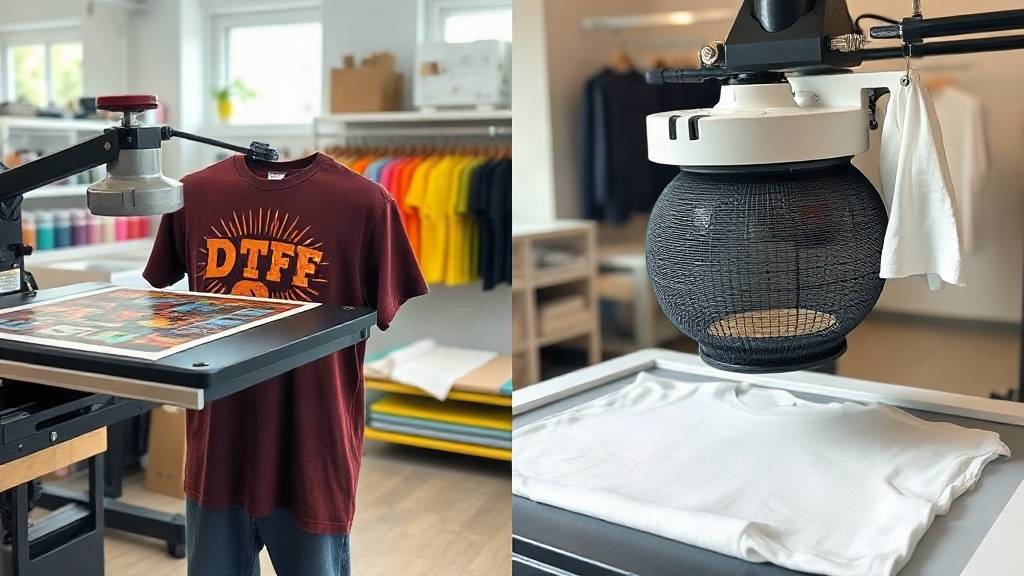
When you're building a custom apparel brand, one of the first big decisions you'll face is how to print your designs. Two popular methods are DTF transfers and screen printing. Both have passionate fans, and both can produce great results, but they serve different needs. In this article, we'll compare them head-to-head so you can make an informed choice for your business.
What Are DTF Transfers?
DTF transfers (Direct to Film) are a relatively new printing technology that has taken the custom apparel world by storm. The process involves printing your design onto a special film using pigment-based inks, then applying a powder adhesive and curing it. The transfer is then pressed onto the fabric with a heat press. DTF transfers work on a wide range of materials, including cotton, polyester, blends, and even nylon. They're known for their vibrant colors and fine detail reproduction.
What Is Screen Printing?
Screen printing is a traditional method that's been around for centuries. It involves creating a stencil (the screen) for each color in your design, then pushing ink through the mesh onto the fabric. Each color requires a separate screen, and the process is repeated for each color. Screen printing is famous for its durability and ability to produce bright, opaque colors on dark garments. However, it's most cost-effective for large orders of the same design.
Key Differences: DTF Transfers vs. Screen Printing
1. Setup Costs and Minimum Orders
Screen printing typically requires a setup fee for each color in your design, as screens need to be created. This makes it less economical for small orders or designs with many colors. DTF transfers, on the other hand, have no setup fees and no minimum order quantity. You can print one-off designs without breaking the bank, making them perfect for sampling, small batches, or print-on-demand.
2. Cost per Unit
For large orders (say, 100+ pieces of the same design), screen printing often has a lower cost per unit because the setup costs are spread out. DTF transfers have a higher cost per unit for large runs, but the difference can be negligible when you factor in the flexibility and lack of minimums. If you're ordering 50 pieces or fewer, DTF transfers are usually more affordable.
3. Color and Detail Reproduction
Screen printing excels at solid, bold colors, but it struggles with gradients, fine lines, and photographic images. Each color must be separated, which can be challenging for complex designs. DTF transfers can reproduce full-color images, gradients, and intricate details with ease. They use CMYK+White inks, so you can print photorealistic designs without worrying about color separations.
4. Fabric Compatibility
Screen printing works best on 100% cotton or high-cotton blends. It can be used on polyester, but requires special inks and can be tricky. DTF transfers adhere well to a wide range of fabrics, including cotton, polyester, blends, and even treated nylon. This versatility makes DTF a go-to for brands that offer various garment types.
5. Durability and Feel
When properly applied, both methods produce durable prints that can withstand many washes. Screen printing has a slight edge in longevity on natural fabrics, but DTF transfers have improved significantly and can last just as long with proper care. In terms of feel, screen printing can be thick on heavy ink deposits, while DTF transfers have a slightly rubbery feel that softens after washing. Neither is inherently better; it depends on your preference.
6. Turnaround Time
Screen printing requires time to set up screens, which can add days to your production schedule. DTF transfers can be printed and pressed quickly, often within minutes. If you need fast turnaround, DTF is the clear winner. This is especially important for e-commerce brands that offer on-demand production.
When to Choose DTF Transfers
DTF transfers are ideal for:
- Small to medium orders (1-100 pieces)
- Designs with many colors, gradients, or photographic elements
- Printing on a variety of fabrics, including polyester and blends
- Print-on-demand or made-to-order business models
- Quick turnaround times
- Sampling and prototyping
If you're a startup or a brand that offers personalized products, DTF transfers give you the flexibility to experiment without huge upfront costs.
When to Choose Screen Printing
Screen printing is better for:
- Large orders (100+ pieces) of the same design
- Simple designs with few colors
- 100% cotton garments where a soft feel is crucial
- Long-term durability on natural fabrics
- Brands with consistent, high-volume production
If you're a established brand with predictable sales, screen printing can offer cost savings at scale.
How Shaka Wear and Smart Blanks Fit In
When choosing your printing method, the garment itself matters just as much. Shaka Wear is known for its heavyweight, durable t-shirts that take both DTF transfers and screen printing well. Their classic tees are a favorite among streetwear brands. Smart Blanks offers a range of affordable, high-quality blanks that are perfect for DTF printing due to their smooth surfaces and consistent fabric. Pairing the right blank with the right printing method can elevate your final product.
Frequently Asked Questions
Can I use DTF transfers on dark garments?
Yes, DTF transfers include a white ink layer that allows them to show up vibrantly on dark fabrics. The white layer acts as a base, so colors remain bright and opaque.
How long do DTF transfers last?
With proper application and care (washing inside out, avoiding high heat), DTF transfers can last 50+ washes. They are quite durable and comparable to screen printing.
Is screen printing better for large orders?
For large orders of the same design, screen printing often has a lower cost per unit because the setup costs are amortized over many pieces. However, if your design has many colors, DTF might still be more cost-effective.
What fabrics work best with DTF transfers?
DTF transfers work on cotton, polyester, blends, and even nylon. They are especially good for polyester and synthetic fabrics where screen printing can be challenging.
Do I need special equipment for DTF transfers?
To apply DTF transfers, you need a heat press. The transfers themselves are printed with a DTF printer, which you can outsource or buy. Many suppliers offer ready-to-press transfers, so you don't need the printer yourself.
Final Thoughts
Both DTF transfers and screen printing have their place in the custom apparel industry. Your choice should depend on your order size, design complexity, fabric type, and budget. Many successful brands use both methods, choosing the best one for each project. If you're just starting out, DTF transfers offer the flexibility and low upfront costs you need. As you grow, you might incorporate screen printing for large runs. Whichever you choose, quality blanks from brands like Shaka Wear and Smart Blanks will ensure your prints look their best.