
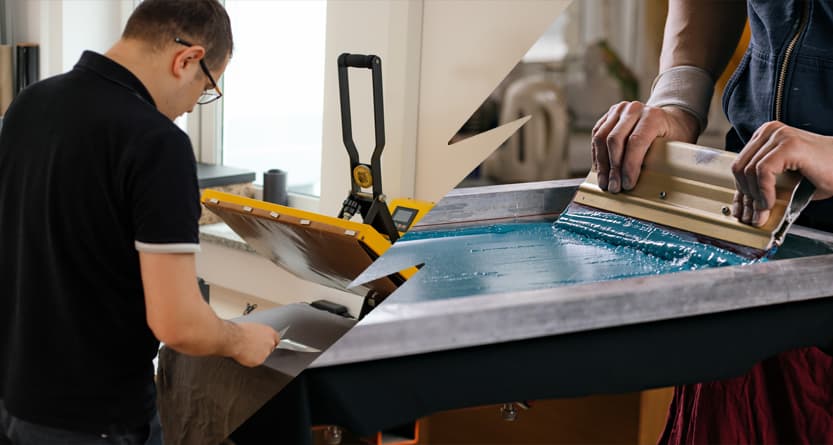
When it comes to customizing apparel, the debate between sports transfers and screen printing is a hot topic among enthusiasts and professionals alike. Both methods offer unique advantages and cater to different needs, making it essential to understand their differences. In this article, we will delve into the intricacies of sports transfers versus screen printing, helping you determine which option is better suited for your specific requirements.
As we explore the world of sports transfers, you'll discover how this method allows for vibrant colors and intricate designs, making it a popular choice for team uniforms and promotional items. On the other hand, screen printing boasts durability and cost-effectiveness, especially for bulk orders. By the end of this article, you will have a comprehensive understanding of the strengths and weaknesses of each technique, empowering you to make an informed decision.
Whether you're a small business owner looking to create custom merchandise or a sports team in need of uniforms, knowing the right printing method can significantly impact your project's success. Join us as we break down the key factors to consider, including design complexity, material compatibility, and budget constraints. Stay with us to uncover the best choice for your next apparel customization project!
When it comes to customizing sports apparel, two popular methods stand out: sports transfers and screen printing. Each method has its own advantages and disadvantages, making it essential to understand their differences to choose the best option for your needs.
Advantages of Sports Transfers
Sports transfers offer a range of benefits that make them an attractive option for customizing apparel. One of the primary advantages is the ability to produce high-quality, vibrant designs that can include intricate details and a variety of colors. This method allows for full-color images and complex graphics, which can be particularly appealing for teams looking to showcase their logos or unique designs.
Additionally, sports transfers are relatively quick to apply, making them ideal for urgent orders or last-minute customization. The process involves printing the design onto a special transfer paper, which is then heat-pressed onto the fabric. This efficiency can be a significant advantage for sports teams needing uniforms on short notice.
Benefits of Screen Printing
Screen printing is another popular method for customizing sports apparel, known for its durability and cost-effectiveness, especially for bulk orders. One of the key benefits of screen printing is its longevity; designs created through this method can withstand numerous washes without fading or cracking, making it a preferred choice for teams that require uniforms to last through multiple seasons.
Moreover, screen printing can be more economical for larger quantities. The setup costs may be higher initially, but the per-unit cost decreases significantly as the order size increases. This makes screen printing a viable option for teams or organizations looking to outfit a large number of players or members.
Quality Comparison: Transfers vs. Screen Printing
When comparing the quality of sports transfers and screen printing, several factors come into play. Sports transfers can achieve a high level of detail and color vibrancy, which is often unmatched by screen printing, especially for complex designs. However, the quality of the transfer can depend on the type of material used and the application process.
On the other hand, screen printing is renowned for its durability and resistance to wear and tear. The ink used in screen printing penetrates the fabric, creating a long-lasting bond that can endure the rigors of athletic wear. Therefore, while transfers may excel in design complexity, screen printing often wins in terms of longevity and resilience.
Cost Considerations for Teams
Cost is a crucial factor for many teams when deciding between sports transfers and screen printing. Sports transfers generally have lower initial costs, making them appealing for small orders or one-off designs. However, as the quantity increases, the cost-effectiveness of screen printing becomes more apparent.
For teams looking to order uniforms in bulk, screen printing can provide significant savings in the long run. It is essential for teams to evaluate their specific needs, including the number of items required and the complexity of the designs, to determine which method will be more cost-effective for their situation.
Application Process: Ease and Efficiency
The application process for sports transfers and screen printing varies significantly, impacting the overall efficiency of each method. Sports transfers are relatively straightforward, requiring only a heat press and transfer paper. This simplicity allows for quick application, making it ideal for urgent orders or small batches.
In contrast, screen printing involves a more complex setup, including creating screens for each color in the design. This process can be time-consuming, especially for multi-color designs. However, once the screens are prepared, the actual printing process can be quite fast, particularly for larger orders. Teams must consider their timelines and the urgency of their needs when choosing between these two methods.
Environmental Impact of Each Method
As sustainability becomes increasingly important, the environmental impact of sports transfers and screen printing is worth considering. Screen printing often uses plastisol inks, which can be harmful to the environment if not disposed of properly. However, many companies are now offering eco-friendly inks and practices to mitigate this issue.
On the other hand, sports transfers can also have environmental implications, particularly regarding the materials used in the transfer paper and the inks. Teams should research the practices of their chosen provider to ensure they are making an environmentally responsible choice, regardless of the method selected.
| Criteria | Sports Transfers | Screen Printing |
|---|---|---|
| Definition | A method of applying designs to fabric using heat and pressure. | A technique that involves applying ink directly onto fabric through a stencil. |
| Cost | Generally lower for small runs; cost-effective for custom designs. | Higher initial setup costs; more economical for large quantities. |
| Durability | Good durability; can last through multiple washes if applied correctly. | Highly durable; ink penetrates the fabric, making it resistant to fading. |
| Design Complexity | Best for simple designs and logos; limited color options. | Can handle complex designs with multiple colors and gradients. |
| Production Time | Quick turnaround for small orders; ideal for on-demand printing. | Longer setup time; more efficient for bulk orders. |
| Application | Commonly used for sports jerseys, custom apparel, and promotional items. | Widely used for t-shirts, hoodies, and other clothing items. |
| Environmental Impact | Less waste; uses fewer resources for small runs. | Can produce more waste; requires more materials for setup. |